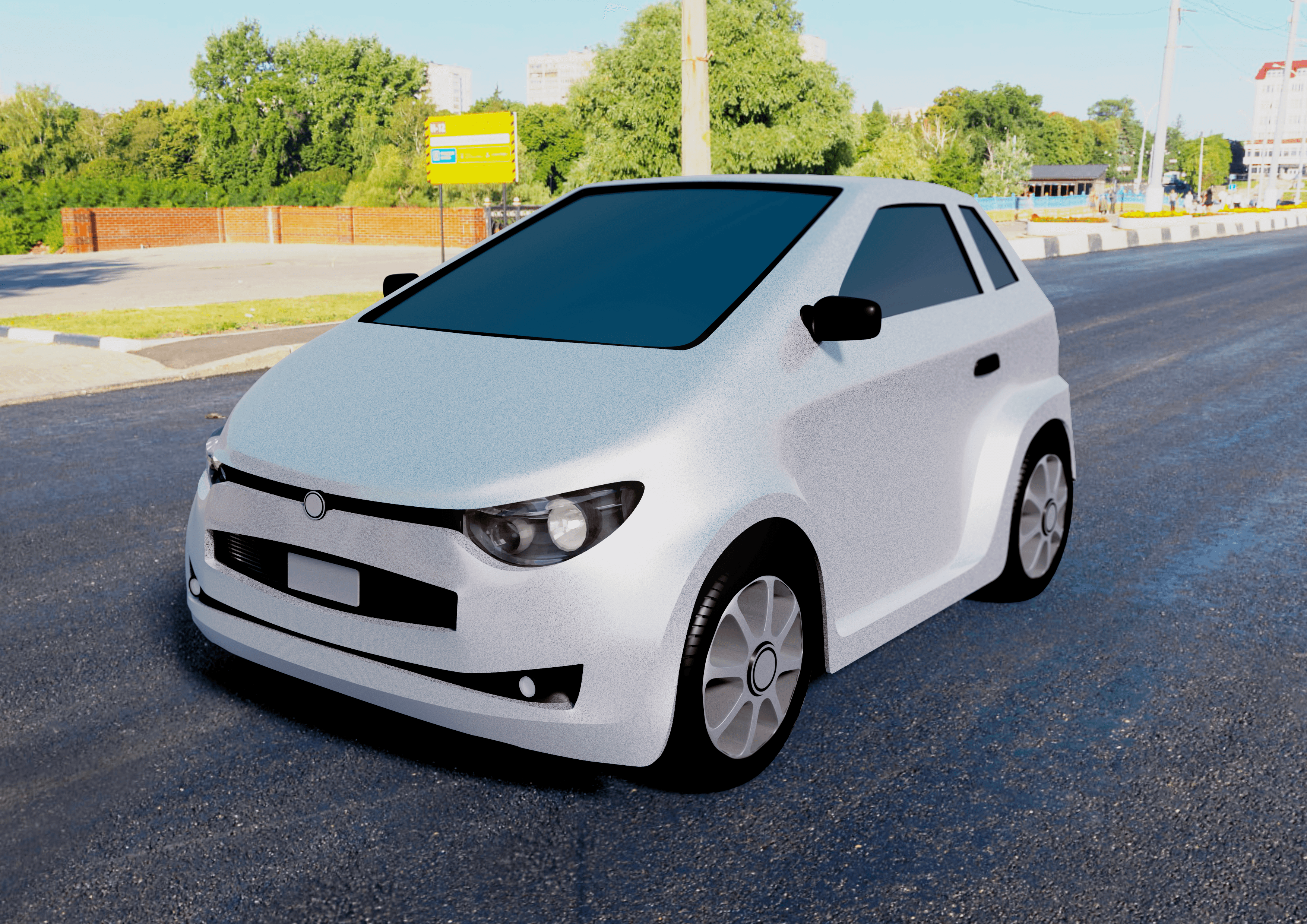
Rebuilding the handmade JAD 3 in 3D
At a Glance
My contribution: 3D modeling, materials, lighting, still rendering, and animation for the JAD 3 electric-car presentation.
Challenge: translate drawings, dimensions, photographs, and an evolving handmade vehicle into a coherent digital model that could communicate the design from controlled viewpoints.
Outcome: a complete exterior model and a set of studio, environmental, and motion renders used to present the compact electric-car concept.
Reconstructing the Car From Reference
The JAD 3 was a handmade electric car conceived in Rio Grande do Sul, Brazil. I worked from the available drawings, measurements, photographs, and visual references to rebuild the exterior in 3D. The material was not a single production blueprint, so the model had to reconcile information coming from different stages of the vehicle.
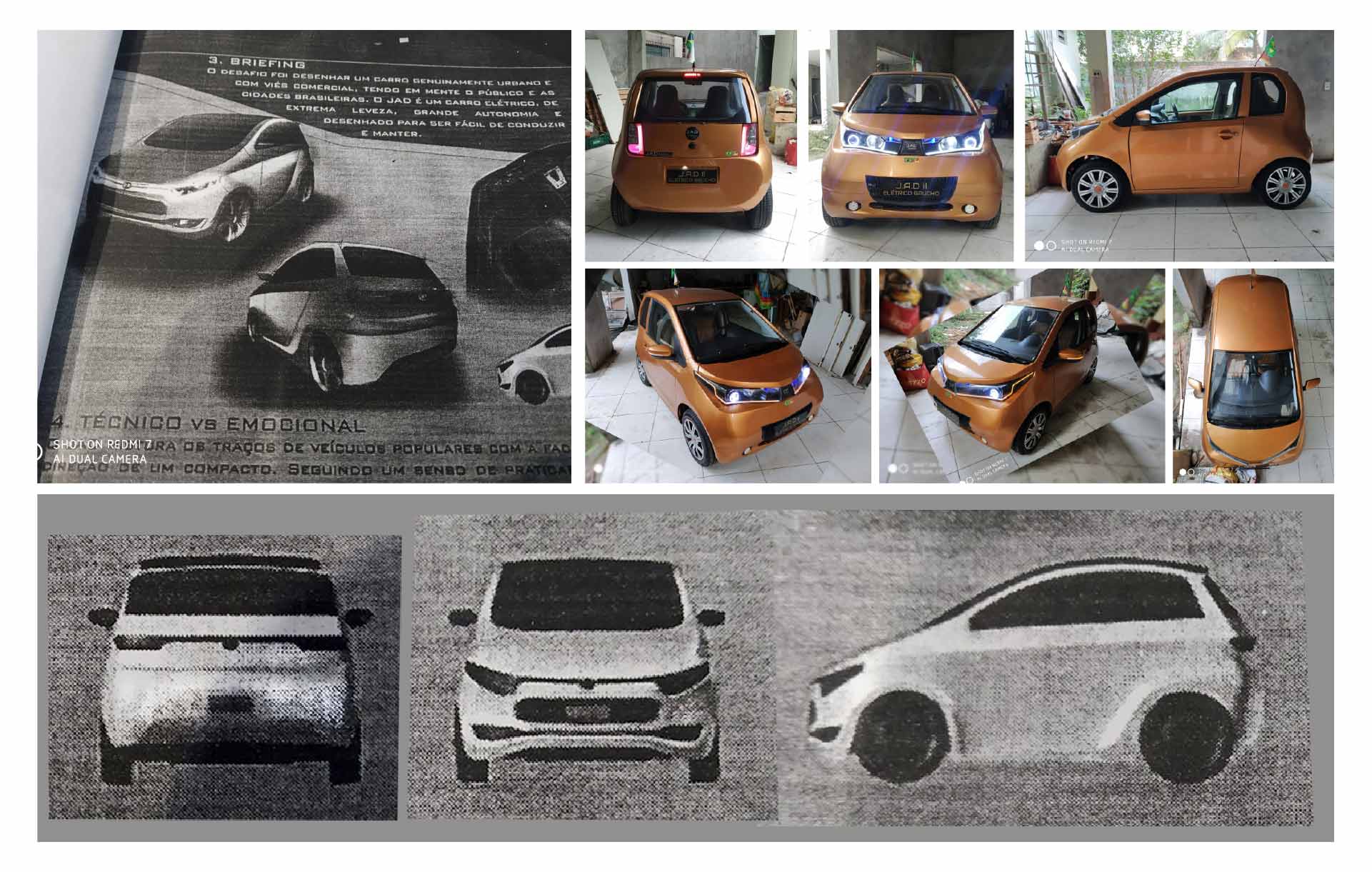
The reference board brings technical proportions and real vehicle details into one modeling source.
From Volume to Automotive Surfaces
I began with the overall footprint, roof line, cabin, and wheel placement. Once the silhouette held together from the front, side, and rear, I separated the body panels and added the openings, lights, mirrors, trim, wheels, and smaller seams.
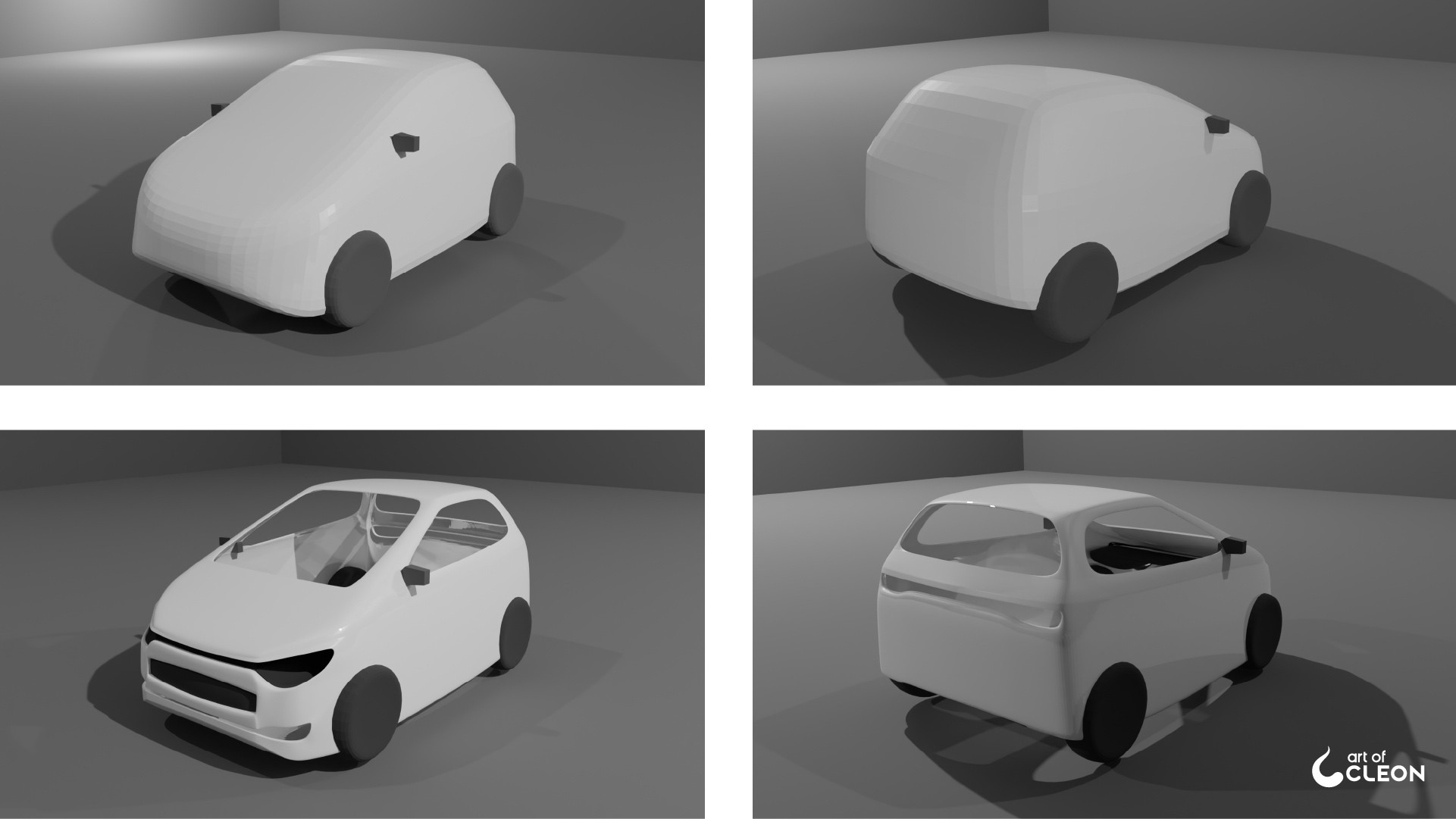
Large volumes are resolved first; panel gaps and components only arrive after the proportions work as a whole.
The original front and rear MP4 loops record the model growing from its first volumes into the resolved exterior. The art of Cleon mark follows the placement used in the 2021 presentation files.
Making White Bodywork Read
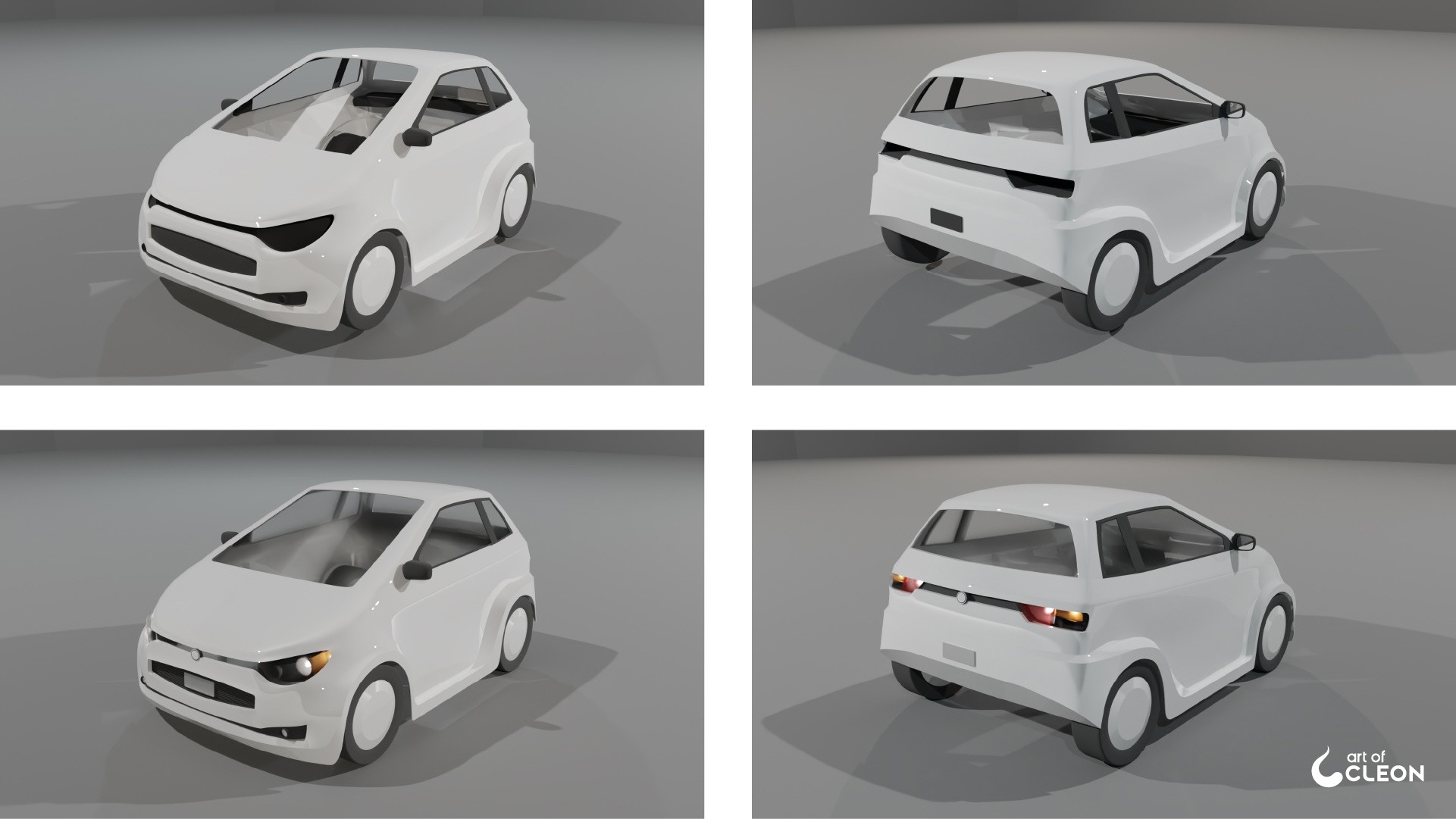
A white vehicle depends on reflection and value separation more than color. The studio setup uses broad gradients across the body, darker glass and trim, and a soft floor reflection to describe curvature. Lighting becomes part of the modeling presentation, revealing where surfaces turn without exaggerating their edges.

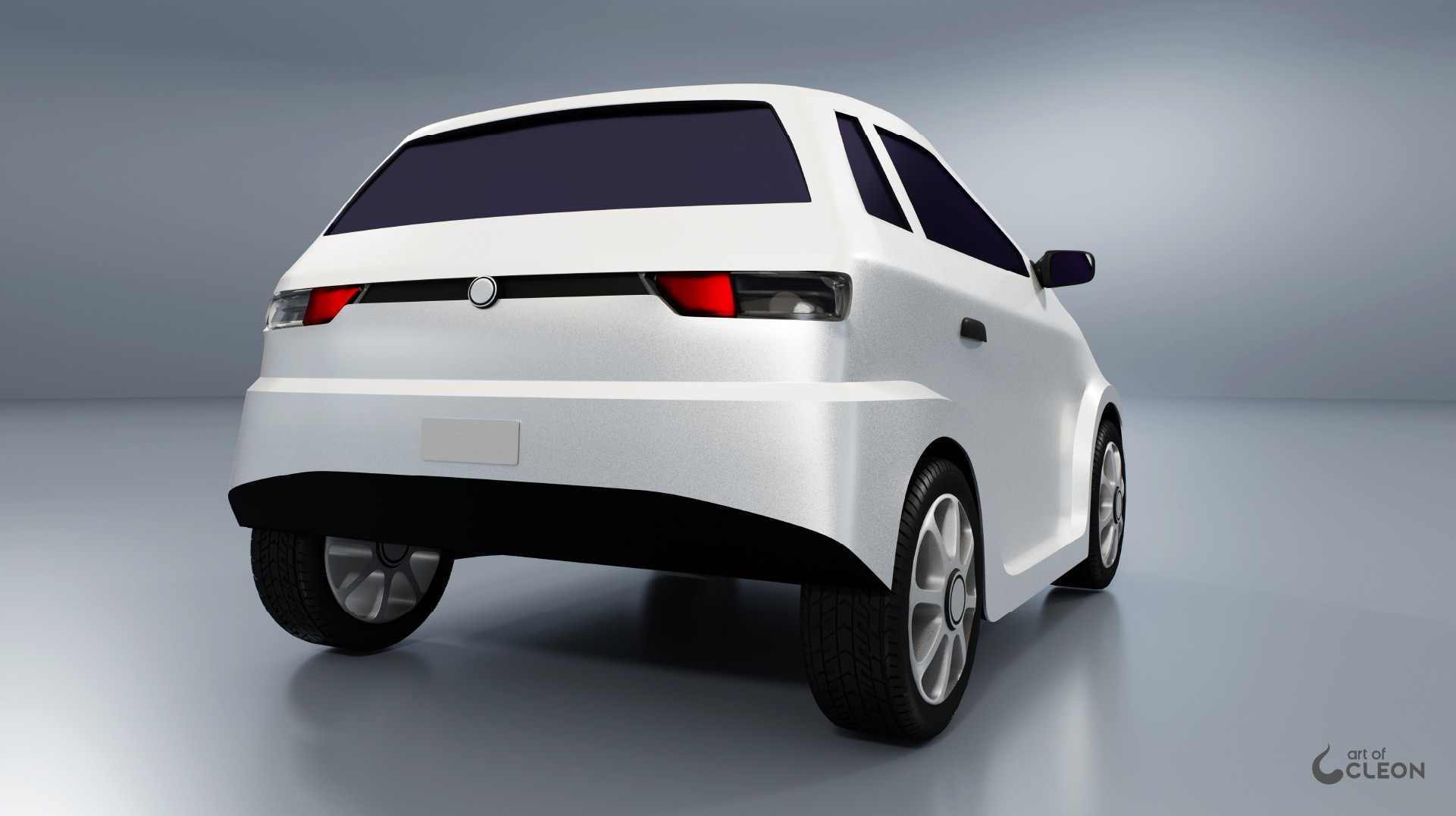

Front, rear, and three-quarter views keep the surface treatment consistent across the vehicle.
The Model Beyond the Studio
Environmental renders and short animations tested the car under changing light and camera movement. They shift the project from an isolated model toward the way a vehicle concept is usually encountered: moving through space and seen from several angles.
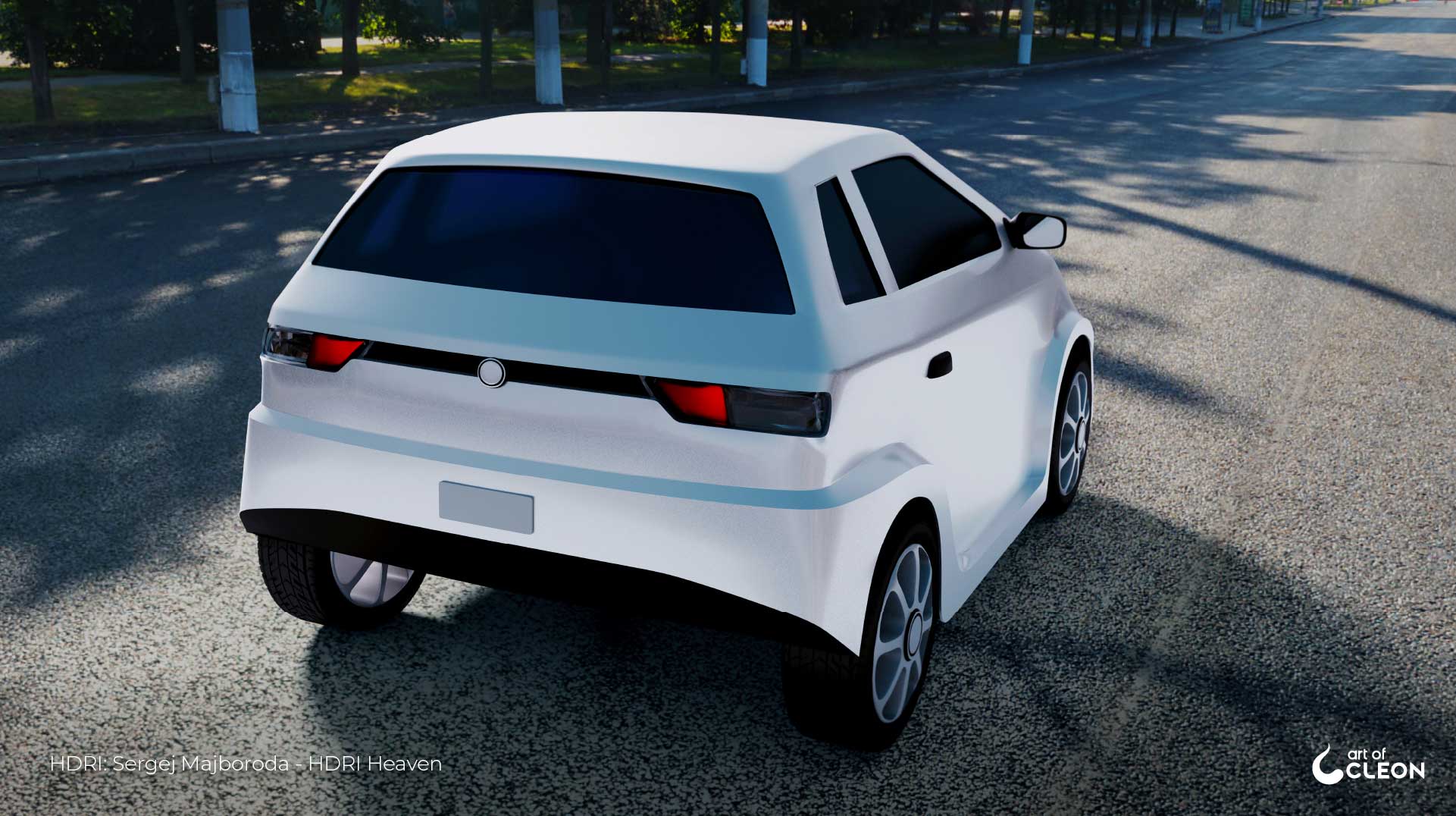
The outdoor render moves the same model beyond the controlled studio setup and tests how its white bodywork responds to a real environment.