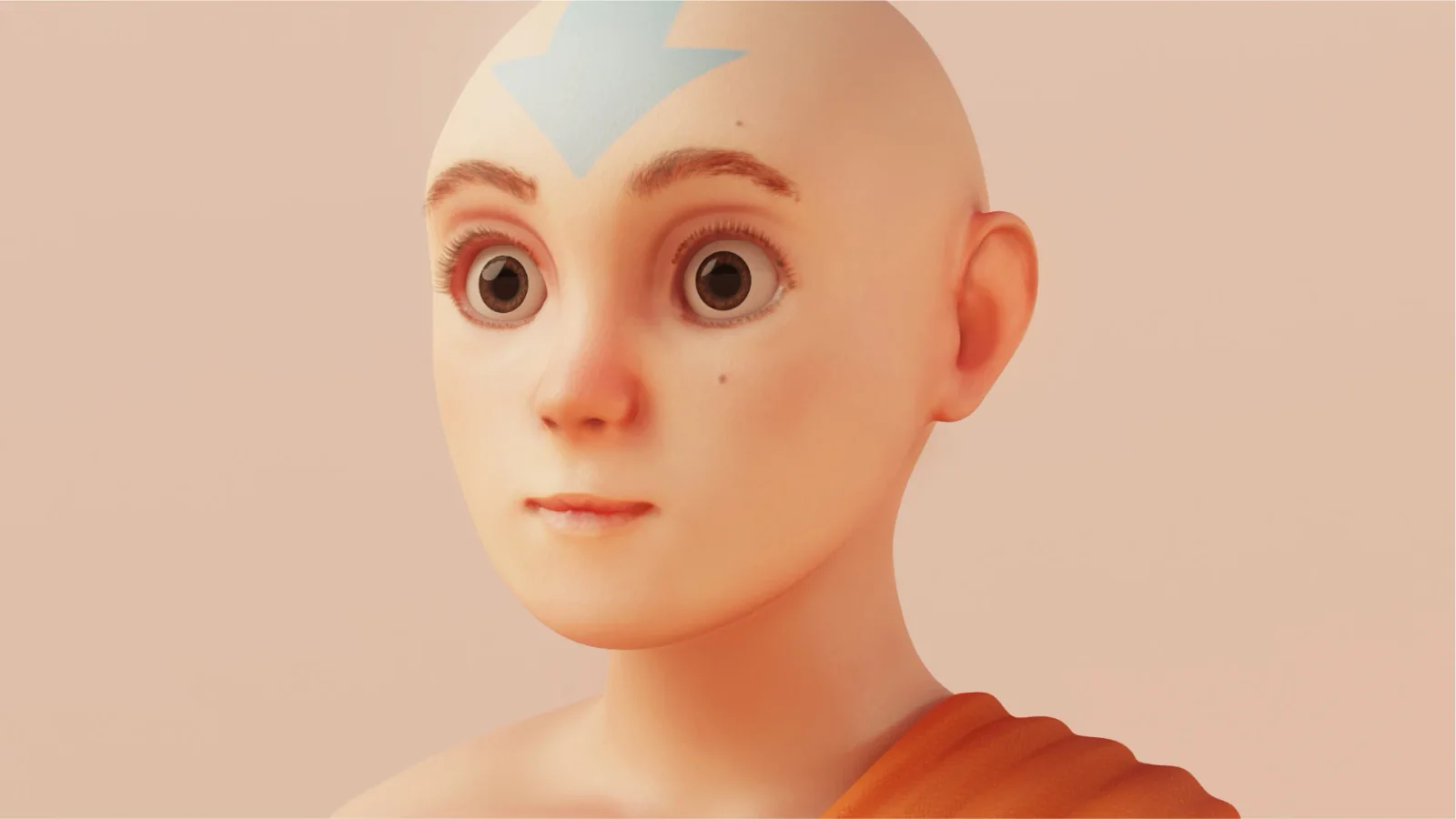
Learning character sculpting through Aang
A First Character Sculpt
I created this personal fan-art project in 2020 while rewatching Avatar: The Last Airbender. It was my first attempt at sculpting a character in 3D, so reproducing Aang’s appearance was only part of the exercise. I also wanted to understand how a character moves from a simple blockout to a finished image.
The face became the main study. Aang’s design depends on a small number of highly recognizable decisions: the round head, large eyes, restrained expression, and blue arrow. Translating those features into volume meant keeping the silhouette simple while giving the skin, eyelids, lips, and ears enough structure to hold up in close views.
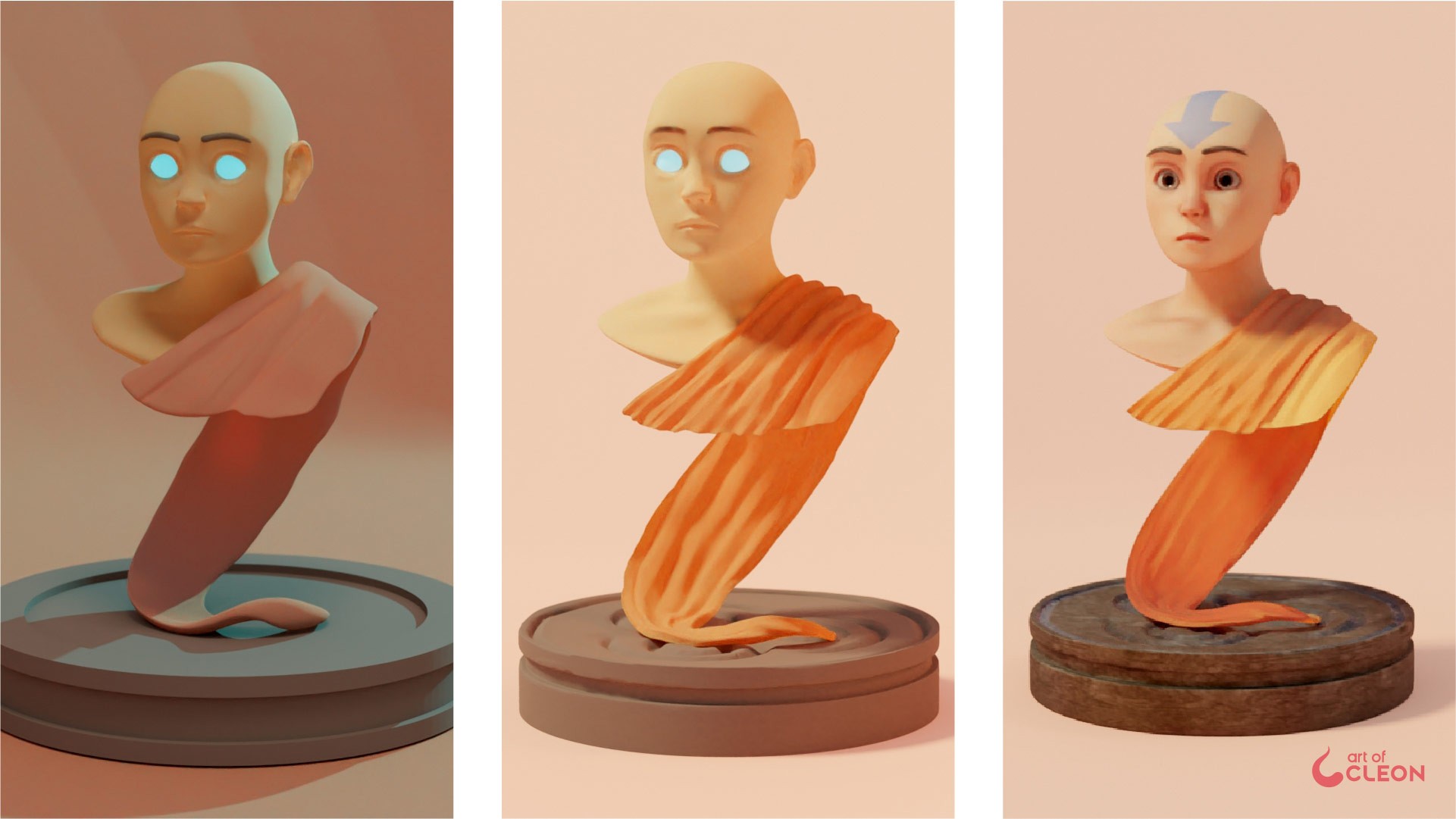
The early studies show the character moving from a basic sculpt toward the first textured version.
Turning the Robe Into the Support
I extended the model beyond the shoulders and used Aang’s robe as the structural gesture of the piece. The fabric leaves the bust, curves downward, and becomes the connection to the base. That long line gives the character a light, floating posture. The costume is built from two overlapping pieces of fabric: an orange outer layer over a yellow inner layer. Their folds remain distinct as the silhouette curves toward the base.
The circular wooden base uses the Air Nomad symbol as its focal point. Together, the robe and base turn the portrait into a small display object instead of an isolated head study.

The rear view makes the robe’s role as both clothing and structural support visible.
From Clay to Materials
I began by sculpting the forms in Blender using a dense, triangulated working mesh, focusing on volume and silhouette before topology. Once the sculpt was defined, I created a clean retopology for the production model, then took that version into Substance Painter to build separate texture sets for the skin, eyes and irises, robe, and wooden base.
That separation let each surface respond differently to light. The skin remains soft, the eyes carry sharper reflections, the robe keeps a woven texture, and the base uses grain and carved details to feel distinct from the character.

Material and lighting tests gradually replace the clay render with the final textured character.
Two States of the Same Character
The final presentation includes a neutral portrait and an Avatar State variation. In the second state, the eyes and arrow become emissive. The change is intentionally concentrated in those features, allowing the same model, pose, and warm palette to carry a different emotional charge.
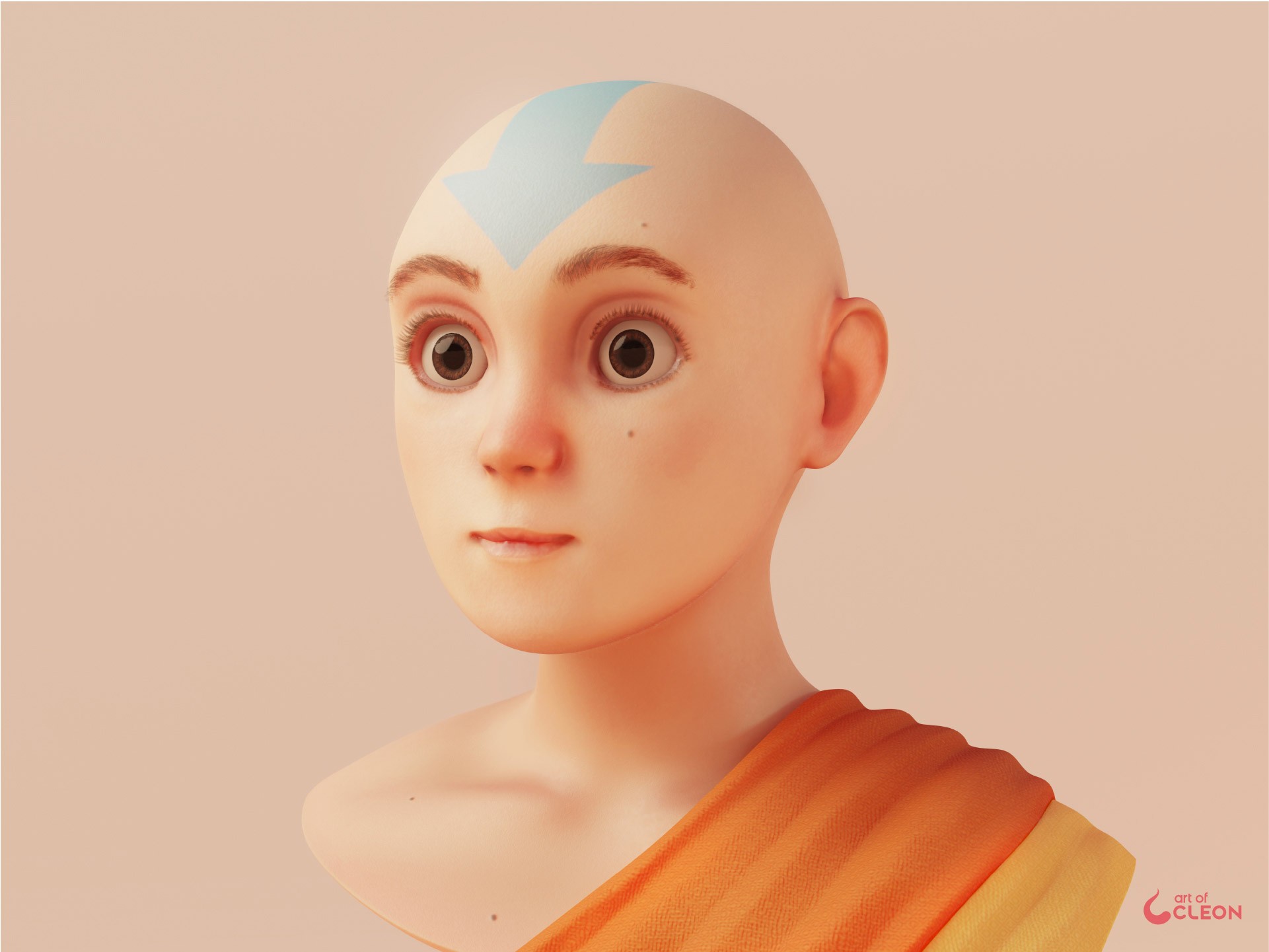
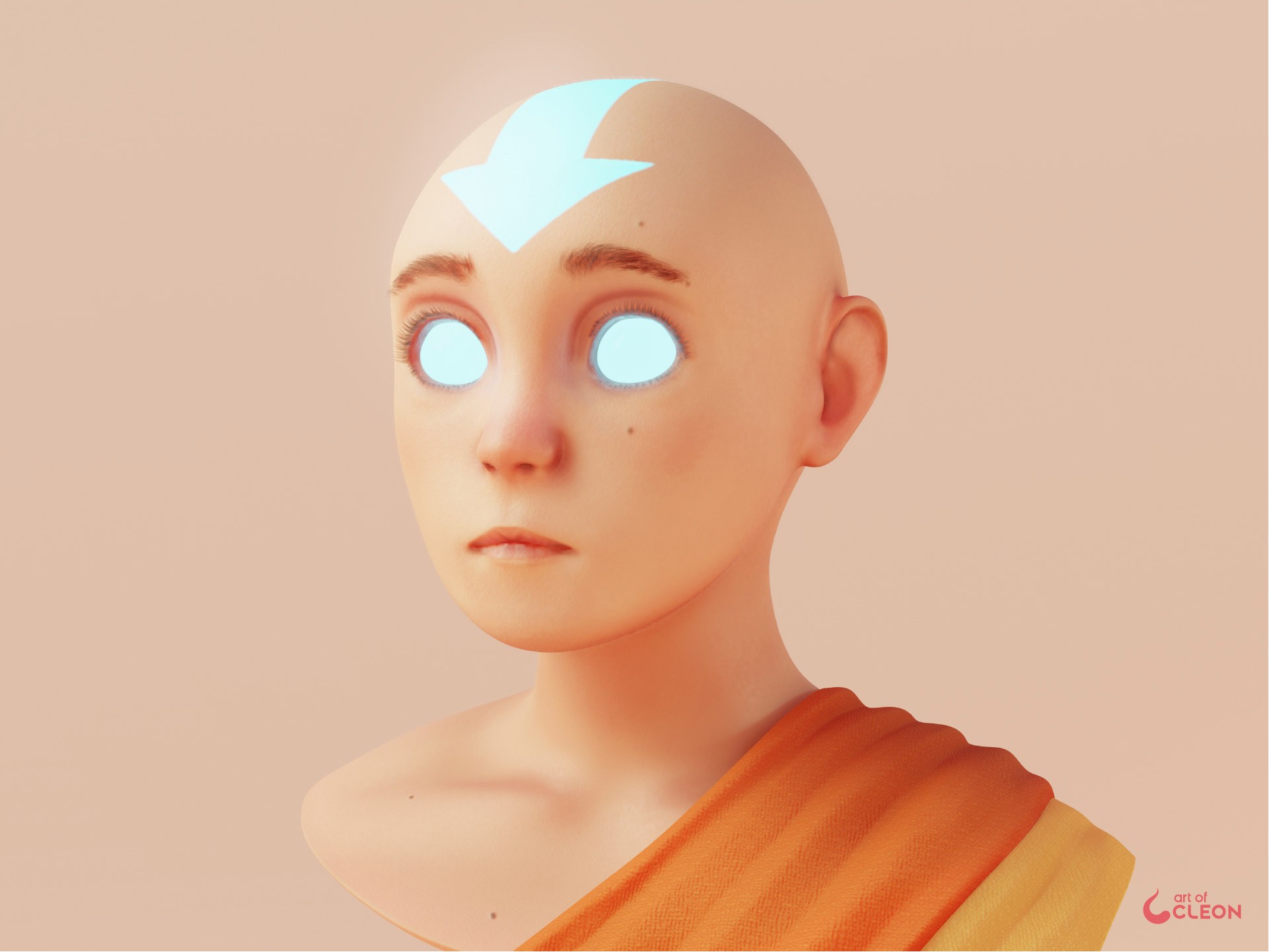
The neutral and Avatar State close-ups use the same framing to make the material change easy to compare.
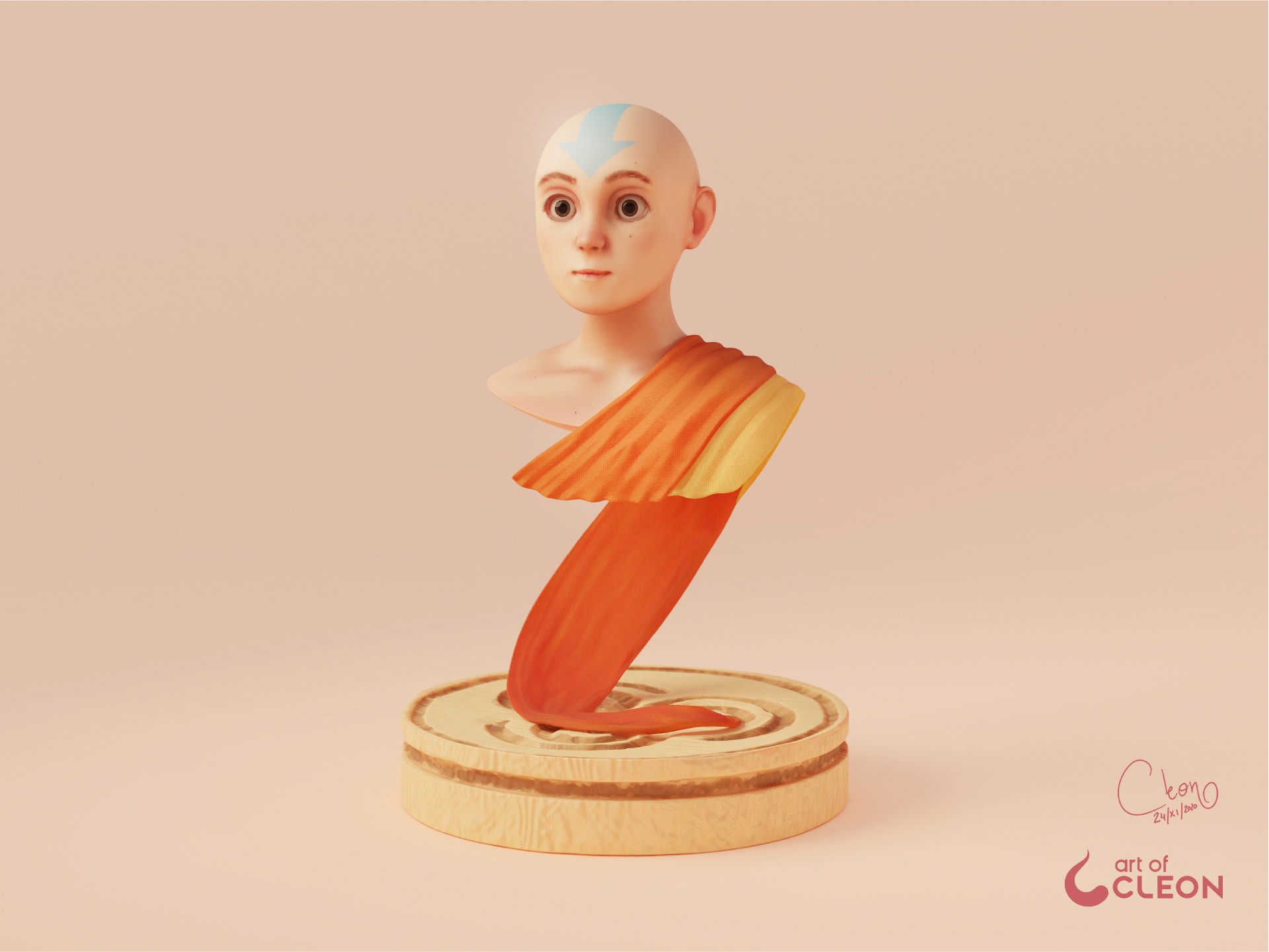
The finished bust combines the character, flowing robe, and carved Air Nomad base into one display piece.